 Log In
Search




 Open Access
 mozzie0518@cqu.edu.cn
Qi Chen, Department of Anesthesiology, Chongqing University Cancer Hospital, No. 181 Hanyu Road, Shapingba District, Chongqing 400030, China. E-mail: mozzie0518@cqu.edu.cn.
Open Accessmozzie0518@cqu.edu.cnQi Chen, Department of Anesthesiology, Chongqing University Cancer Hospital, No. 181 Hanyu Road, Shapingba District, Chongqing 400030, China. E-mail: mozzie0518@cqu.edu.cn.
Psychological trauma is a profound psychological and cognitive effect of extreme, particularly life-threatening, stressors, manifesting as fear, helplessness, anxiety, and flashbacks. It leads to significant emotional and cognitive impairment. In the ICU, such sequelae are more prevalent than in general hospitalized populations due to critical illness, invasive interventions, and exposure to mortality. Emerging data indicate that pediatric survivors of acute respiratory failure have particularly high levels of post-traumatic stress disorder (PTSD) symptomatology with reductions in health-related quality of life (HRQL) and neurocognitive dysfunction [1]. These findings underscore the necessity of screening for PTSD as a measure and prerequisite for optimized rehabilitation. Accordingly, early recognition and focused intervention are vital to prevent acute psychological distress, as well as to modulate the burden of psychiatric morbidity likely to unfold over time after ICU discharge; they are an integral part of the overall management of critically ill patients.
The high-stress ICU environment, combined with the severity and potential existential threat of critical illness, can lead to substantial psychological sequelae on patients.. Acute stress symptoms affect approximately one-quarter of ICU survivors shortly after discharge, while clinically significant PTSD symptoms occur in approximately one-fifth of adult ICU survivors [2]. These disorders are commonly accompanied by anxiety, depression, and sleep fragmentation; they additionally contribute to cognitive decline and impair self-efficacy. They are linked to longer hospital stays, mechanical ventilation, exposure to sedative drugs and the absence of social support. Early detection is key to mitigating symptomatology, and preventing longer-term psychopathology.
ICU patients are at high risk for psychosocial stressors, placing them at risk for psychological sequelae. Survivors may experience post-intensive care syndrome (PICS): PTSD, anxiety, and depression. An RCT (n=60; 35 post-discharge assessments completed) compared ICU diaries versus standard health education in the post-discharge period. At 4 weeks, PTSD (hyperarousal and depression scores combined) improved less in the intervention group compared to the control group, but clinically significant PTSD symptoms remained at all follow-up time points in both groups [3]. These data suggest that psychological morbidity in critically ill patients often persists from acute care through post-discharge recovery rather than being merely temporary. The findings further indicate that single-component interventions may be insufficient in isolation, underscoring the need to establish an integrated prevention and management system across the care continuum.
2.1 Early clinical indicators and screening modalities
2.2 Multidisciplinary synergy in early-phase intervention
2.3 Impact of early intervention on holistic recovery

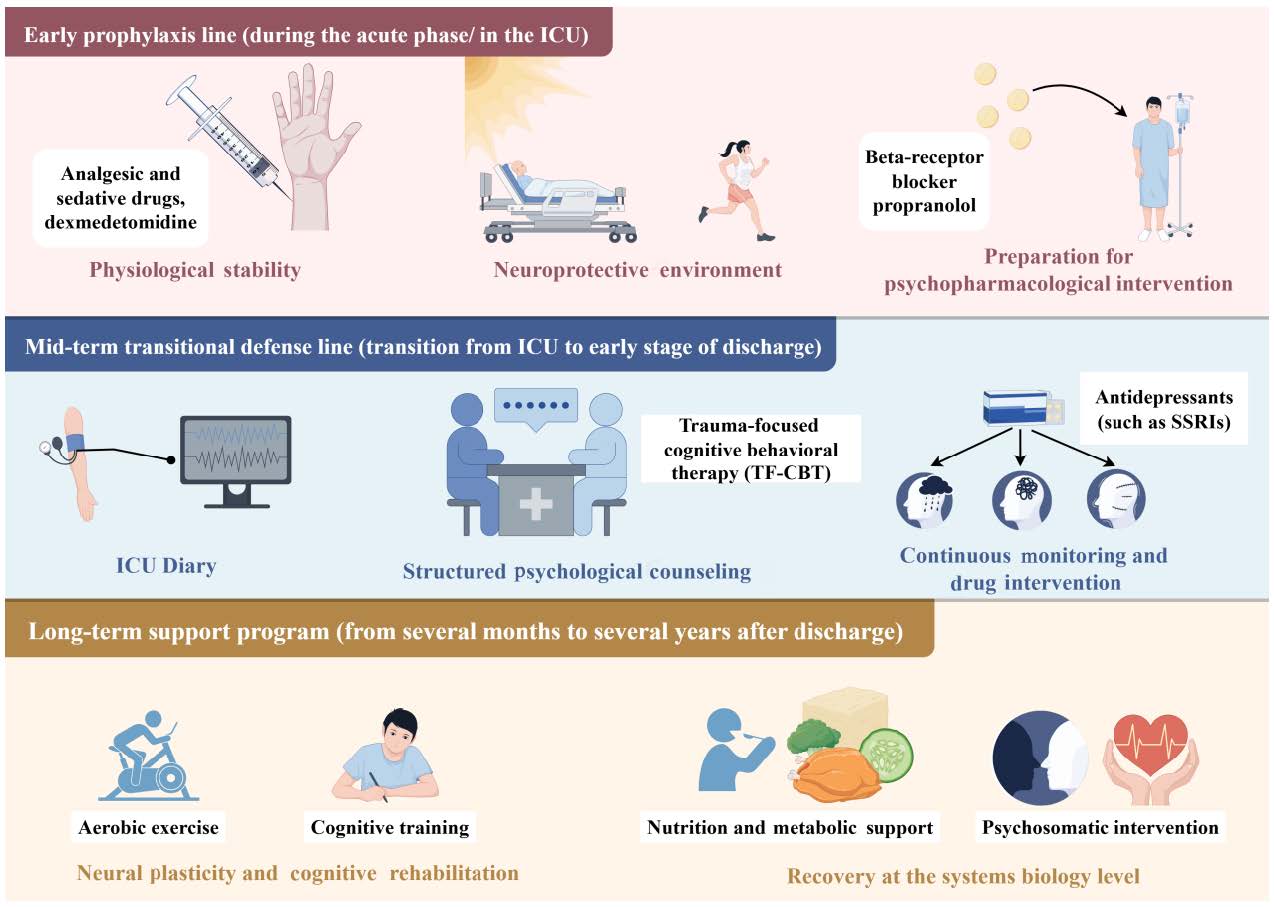
3.1 Persistent psychological sequelae and multi-systemic risks
3.2 Implementation and optimization of longitudinal surveillance protocols
3.3 Optimizing longitudinal surveillance for enhanced outcomes
4.1 Synergistic mechanisms of psychophysiological recovery
4.2 Leveraging technological innovations to enhance intervention efficacy
4.3 Translational evidence and implementation pathways
Post-hoc analyses by group and multicenter studies show that immediately identifying high-risk patients and then targeting them with individualized psychological support affords dramatic reductions in the severity of post-traumatic stress [6]. Working with family-focused teams, clinical evidence suggests that therapists trained in CBT contribute to building psychological resilience [9]. Longitudinal surveillance shows sustained intervention benefits and generalizability through flexibility and adaptiveness in socio-cultural spaces linked with these approaches. Integrating targeted psychological treatment, physiological recovery, and technology heralds a systems-based approach to rehabilitation. This framework consists of the refinement of rehabilitation system design and specific interventions corresponding to the domains of a biopsychosocial recovery system (Figure 2), encompassing transitional needs from acute care through crisis management and functional reintegration.
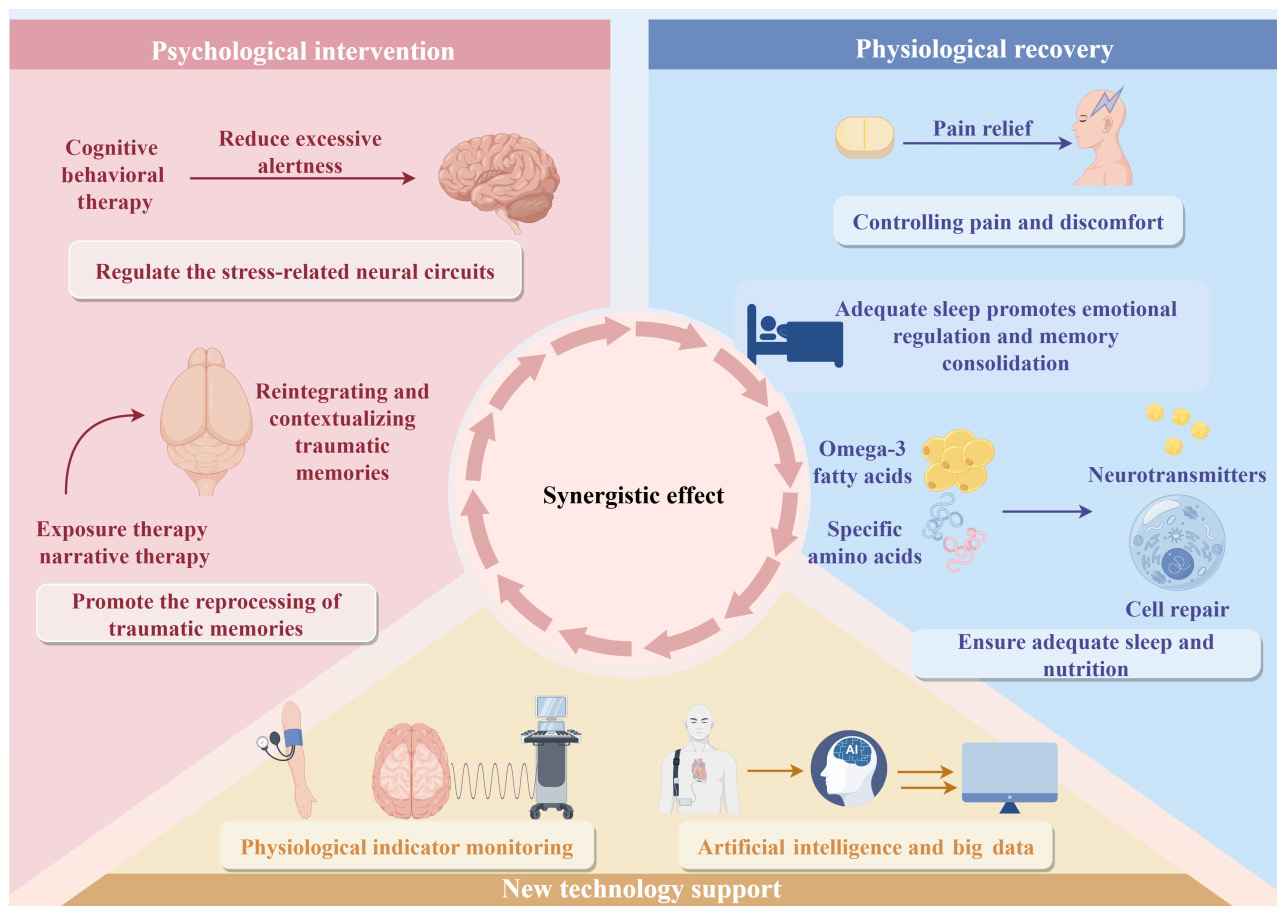
This schema reflects the paradigm of psychotherapeutic support, physiological stabilization and modern technology for handling psychological trauma in patients in critical condition. The therapeutic modalities include CBT and recall reconstruction for emotional trauma. Physiological restoration: Basic rehabilitative principles—pain control, sleep hygiene, and nutrition optimization. AI integration into psychological care using big data analytics and real-time monitoring carries the potential for outcome enhancement through precision-guided psychosocial and rehabilitation interventions. These pillars need to be integrated synergistically to foster biopsychosocial rehabilitation and sustain long-term well-being in patients.
Psychological support for critically ill patients with trauma-related distress remains insufficient to meet the complex and evolving needs of this population, and authorities are therefore calling for multi-faceted support systems. At the policy level, standardized critical care flow sheets with extended follow-up in high-risk cohorts integrated with routine mental health screening and evidence-based interventions should also be implemented. Corrective channeling toward psychotherapeutic rehabilitation (e.g., nurse education, psychosocial interventions, and cognitive behavioral therapy) should be tried. Data from the COVID era demonstrate that nurse-led programs reduced stress, anxiety, and depression without added expense [6]. Interdisciplinary institutional networks should be set up involving intensivists, nurses, and psychologists. When integrated, they would furnish sustained individualized support through continuous management bridging acute episodes with mental health care as a prescription for a scalable adaptive recovery ecosystem.
Structured educational frameworks and targeted training programs aimed at strengthening the psychological resilience of healthcare staff are essential. This kind of training may enhance early recognition of psychological distress and contribute to improved outcomes through timely intervention. The use of multimodal digital platforms that improve psychological wellbeing and sleep among new ICU healthcare staff provides evidence that adaptive training approaches can facilitate stress management in high-stakes occupational environments [9]. Hybrid teaching concepts, encompassing both virtual and traditional elements of learning, should be favored for certified clinical standards and self-regulatory competencies oriented toward the healthcare staff and patients. The contribution to the methodology behind the global psychological protection model is supported by this synthesis, which integrates theory, practice, and clinical expertise.
Mental health in critical illness survivors is also much broader than clinical management. For example, a multi-phase support system involving family, community,and public health is need ed to prevent psychological burden when survivors reintegrate into society. In the ICU, preventive measures must reduce delirious memories and acute stressors to prevent PTSD. Long-term psychiatric follow-up after discharge is an indispensable part of treatment, particularly since the earlier treatment occurs, the better the long-term prognosis is [10]. These measures should be regarded as core outcomes of critical care recovery for the purpose of improving HRQL and advancing systemic health equity among all survivors.
Author contributions
Xintong Dong and Lingjun Chen contributed to the manuscript writing and figure preparation, Qi Chen designed and supervised the work. All authors have read and approved the article.
Funding
This work was supported by the Traditional Chinese Medicine Research Project of Chongqing Municipal Health Commission (2026WSJK143).
Data availability
Data sharing not applicable to this article as no datasets were generated or analyzed during the current study. All information is derived from publicly available articles and datasets.
Ethics approval and consent to participate
Not applicable. This manuscript does not contain any studies with human participants or animals performed by any of the authors.
Consent for publication
Not applicable. This manuscript does not include details, images, or videos relating to an individual person. And this manuscript is original and has not been published elsewhere, nor is it under consideration by any other journal.
Competing interests
The authors declare that they have no competing interests.
Acknowledgements
Not applicable.
ISSN: 2957-5443
Volume 4, Issue 3
September 2026
Pages: 278-374


 Log In

 On This Page
 CITE
CITE