 Log In
Search




 Open Access
 2286990788@qq.comOpen Access2286990788@qq.com
Perioperative pain management remains challenging, as inadequate analgesia may delay recovery and increase opioid exposure. Multidisciplinary pain management (MPM) emphasizes multimodal and collaborative strategies, creating opportunities for integrating non-pharmacological interventions. Acupuncture anesthesia (AA), derived from traditional Chinese medicine, has re-emerged as a potential adjunct in perioperative care through modulation of nociceptive transmission, stress responses, and opioid requirements. This review summarizes the historical development, proposed neuroimmune mechanisms, and current clinical applications of AA in modern perioperative settings. Evidence from randomized controlled trials and meta-analyses suggests that AA may reduce postoperative pain scores, opioid consumption, and postoperative nausea and vomiting, and facilitate recovery in selected procedures. Moderate-level evidence supports its adjunctive role in gastrointestinal, orthopedic, and gynecological surgeries, whereas evidence in thoracic, cardiac, and highly invasive procedures remains limited and inconsistent. Critically, current evidence is constrained by small sample sizes, heterogeneous acupuncture protocols, inadequate blinding, regional concentration of studies, and insufficient long-term outcome reporting. These limitations reduce external validity and hinder guideline-level recommendations. Overall, AA shows promise as part of MPM pathways, particularly in enhanced recovery protocols, but standardized intervention protocols and large multicenter high-quality trials are needed before broader implementation in perioperative anesthesia practice.
Keywords: Acupuncture anesthesia, Perioperative pain management, Multimodal analgesia, Neuroimmune modulation, Opioid-sparing strategy
Pain is one of the most common and challenging symptoms in clinical practice. Especially in the perioperative environment, insufficient pain control may adversely affect surgical results, recovery quality, and patient satisfaction. Despite advances in anesthesia technology, perioperative pain management in many patients is still not ideal, and is often affected by opioid-related adverse reactions, delayed recovery, and prolonged hospitalization [1]. In response to these challenges, the application of multidisciplinary pain management (MPM) in perioperative medicine is increasingly widespread, emphasizing coordination and cooperation between anesthesiologists, surgeons, nurses, rehabilitation specialists, and other medical professionals to optimize analgesic effects and functional recovery [2-4]. In perioperative nursing, MPM is different from its application in chronic pain management. The goal of perioperative MPM is not to focus on long-term psychosocial rehabilitation, but to achieve effective intraoperative and early postoperative analgesia, reduce perioperative stress response, minimize the use of opioids, and support enhanced recovery after surgery (ERAS) pathways [4-6]. However, the implementation of perioperative MPM still faces major obstacles, including limited interdisciplinary training, inconsistency of clinical programs, and over-reliance on drug interventions, which together limit the development of comprehensive, patient-centered analgesic strategies [3, 7].
Acupuncture anesthesia (AA) is a unique non-drug technology that has been incorporated into perioperative clinical practice since the middle of the 20th century, especially in China [1, 8, 9]. AA is rooted in the theory of traditional Chinese medicine (TCM) and is increasingly explained through modern neurophysiological frameworks. It involves the use of acupuncture stimulation as an anesthesia or anesthesia adjuvant method during surgery. It is important to note that AA should be distinguished from acupuncture for pain relief, which is mainly used for postoperative or chronic pain relief. In the perioperative context, AA aims to regulate nociceptive transmission, reduce surgical stress response, and support intraoperative and early postoperative analgesia, usually as part of a multimodal anesthesia regimen rather than as a standalone anesthesia technique [1].
More and more evidence shows that AA can affect perioperative analgesia through a variety of mechanisms, including regulating the release of endogenous opioids, regulating central and peripheral neurotransmitters, and regulating neuroimmunity and autonomic nervous system [8, 10]. Clinically, it is reported that AA can reduce the dosage of anesthetics and opioids, reduce the amount of bleeding during surgery, and promote the postoperative recovery of specific surgical populations [11, 12]. However, the clinical efficacy of AA varies between different surgeries and patient groups, and its integration in the modern perioperative path is still uneven. In addition, there is still uncertainty about standardized protocols, appropriate indications and the strength of supporting evidence, which highlights the need for systematic evaluation [11, 13].
In this review, we focus on the role of AA in perioperative pain and anesthesia management. We have summarized its historical development, the basis of the mechanism related to perioperative analgesia, its clinical application in various surgical environments, and its integration in the multidisciplinary perioperative nursing model. Furthermore, we also critically discussed the current limitations, implementation obstacles and future research directions, aiming to clarify the potential value and challenges of integrating AA into contemporary perioperative practice.
A systematic literature retrieval was carried out to identify evidence related to AA and perioperative-based anesthesia and pain management interventions. Data were retrieved from PubMed, Web of Science, Embase and Wanfang from the beginning of the database establishment to December 31, 2025. Search terms were developed using controlled vocabulary (when available) and free-text keywords, including “acupuncture anesthesia” OR “acupuncture-assisted anesthesia” OR “electroacupuncture”, combined with perioperative/anesthesia-related terms such as “perioperative” OR “intraoperative” OR “anesthesia” OR “analgesia” OR “enhanced recovery”. The reference list of eligible papers and relevant reviews was manually screened to identify other studies. A representative PubMed search strategy is provided in Supplementary Table 1.
Eligible studies included clinical trials (randomized or non-randomized), observational studies, and relevant experimental studies published in English or Chinese that examined AA or acupuncture-based interventions used as anesthetic adjuncts in perioperative or intraoperative settings and reported anesthesia- or analgesia-related outcomes (e.g., pain intensity, opioid consumption, anesthetic requirements, recovery indicators, or adverse events). Studies that only focus on chronic pain management or postoperative acupuncture analgesia without clarifying the correlation of the perioperative period and the conference summary were excluded. The case report was not used as the main evidence, but it can be selectively cited when appropriate to illustrate the historical feasibility. First, the title and abstract were screened, and then the full text was evaluated for suitability. Screening and eligibility assessment were conducted by a single reviewer (C.Q.). Included studies were summarized by perioperative phase (preoperative, intraoperative, postoperative), surgical context, and study design. The quality of the study and the intensity of evidence are interpreted according to the methodological rigor (such as randomization, blindness, sample size and result report), and caution is maintained when drawing conclusions from low-level evidence. Only a small number of non-perioperative studies were cited to support the mechanism or background discussion, and they did not serve as the main evidence of perioperative clinical conclusions. This review is a narrative/qualitative synthesis based on structured retrieval, and not an informal systematic review.
3.1 Definition and scope of AA
AA refers to the use of acupuncture stimulation as anesthesia or anesthesia-assisted technique in the perioperative period, especially during and postoperative and postoperative period [14, 15]. In modern clinical practice, AA is rarely used as a separate anesthesia method; on the contrary, it is usually integrated into a multi-mode anesthesia strategy to enhance analgesia, reduce the need for drug anesthesia, and regulate the physiological stress response during the perioperative period [12, 16, 17]. In the context of the perioperative period, the main goals of AA include reducing the transmission of injury sensations during surgery, stabilizing autonomic and neuroendocrine responses, and promoting postoperative recovery [14]. These effects are achieved through targeted stimulation of specific acupoints, usually combined with modern anesthetics, under the supervision of the perioperative team led by the anesthesiology department. Therefore, AA should be understood as an integral part of perioperative anesthesia management, not an isolated alternative therapy [17].
3.2 Distinction between AA and acupuncture analgesia
A clear conceptual distinction must be made between AA and acupuncture analgesia, because the confusion of these two methods leads to inconsistency in clinical interpretation and research design. Acupuncture analgesia is mainly used for postoperative pain control or chronic pain management, which is usually carried out outside the operating room. Its main goal is to achieve long-term pain relief, function improvement and symptom adjustment through repeated treatment [13].
In contrast, AA is especially implemented in the perioperative period, focusing on intraoperative analgesia and postoperative immediate pain regulation. The result indicators of AA emphasize the effect of anesthesia saving, intraoperative hemodynamic stability, stress response reduction and early recovery indicators, rather than long-term pain results. Failure to distinguish between the two methods may lead to improper derivation of evidence from chronic pain studies to perioperative anesthesia practice.
3.3 Role of AA in multimodal perioperative analgesia
From the perspective of modern anesthesiology, AA is most suitable as a non-drug component of multi-mode perioperative analgesia. By acting on the central and peripheral injury receptor pathways, autonomic nervous system regulation and neuroimmune interactions, AA may supplement the effect of drug anesthetics and analgesics [10, 16]. This integration is particularly relevant in strategies to reduce opioid use and ERAS programs [14, 17]. Importantly, the effectiveness of AA is affected by many factors, including the type of surgery, stimulation techniques (e.g., manual acupuncture and electric acupuncture), patient characteristics, and the time of intervention in the perioperative workflow [13, 18]. Therefore, standardized definitions and clear clinical indications are crucial to evaluate the role of AA in modern perioperative anesthesia management.
4.1 The evolution of acupuncture toward modern perioperative practice
Acupuncture is one of the oldest therapeutic methods developed from Chinese medicine. Its traditional concepts of pain control and homeostasis have been documented in early medical literature such as the Huangdi Neijing (The Yellow Emperor's Inner Canon). During successive dynasties, clinical experience continuously accumulated and new techniques were developed, which laid the historical groundwork for later medical adaptation. Although these classical theories were not developed within the framework of modern anesthesiology, they still formed a conceptual basis for somatosensory modulation of pain sensation and stress responses.
In the mid-twentieth century, acupuncture entered a stage where it began to interact more intensively with biomedical science and perioperative medicine. Since the 1950s, some techniques have been introduced into clinical research and standardized practice, leading to their application in hospital settings including perioperative care [19]. Advances in physiology, neuroscience, and clinical trial methodology have allowed acupuncture-related interventions to be assessed using modern scientific tools. For example, neuroimaging methods such as functional magnetic resonance imaging have enabled us to investigate central pain processing networks, whereas device-assisted stimulations such as electroacupuncture (EA) make it possible to control stimulation intensity and frequency parameters [20-22]. This has improved reproducibility and provided a methodological basis for studying acupuncture within the context of anesthesiology.
As acupuncture has become widely used in the treatment of various diseases, perioperative medicine has increasingly focused on how to better improve analgesic effects, reduce anesthetic drug usage, and help patients recover faster before, during, and after surgery. Therefore, AA can be regarded as an extension of acupuncture into the perioperative medical field, meaning that it works together with anesthetic drugs rather than focusing solely on its therapeutic efficacy. Thus, understanding the historical background of acupuncture and moxibustion helps to understand the details of AA's emergence and development. Furthermore, knowing how modernized acupuncture has developed toward standardization and mechanistic understanding can also help us realize why perioperative pain control still focuses so much on AA today. The historical evolution and major milestones of AA in perioperative medicine are summarized in Figure 1.

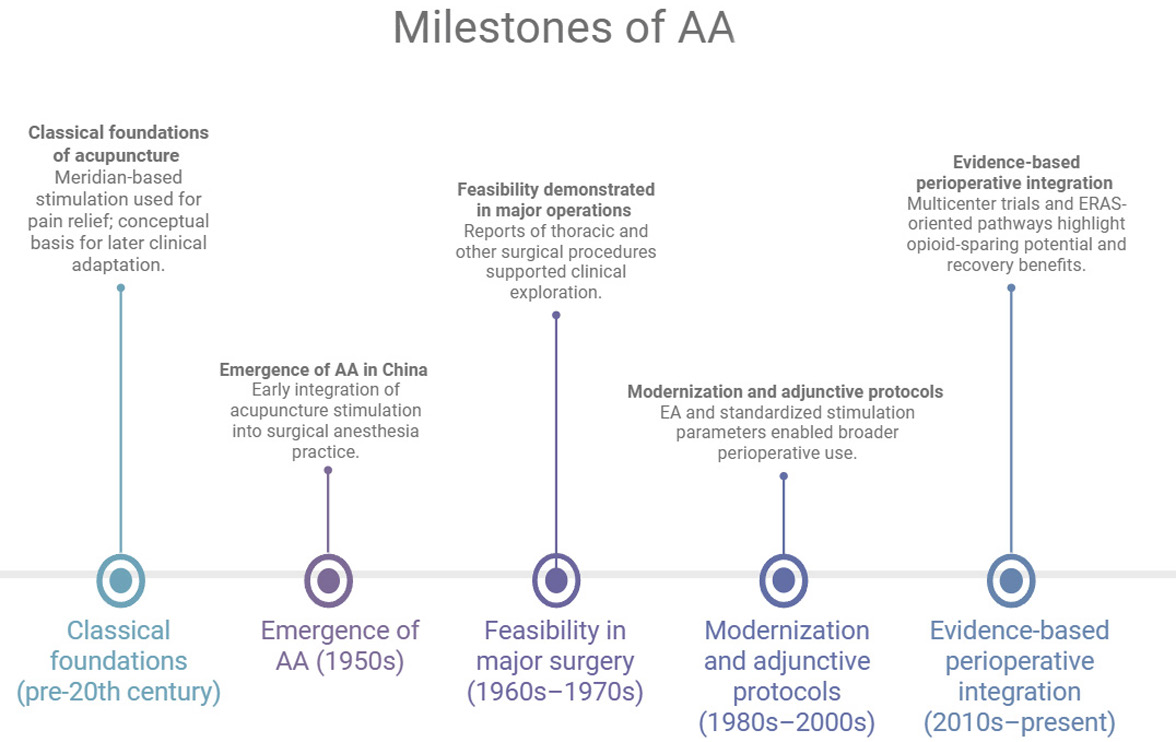
Figure 1. History and key milestones of acupuncture anesthesia in perioperative medicine. The timeline highlights the conceptual basis of acupuncture in pain regulation, the emergence of AA in the 1950s, early feasibility reports in major surgeries, and subsequent modernization through electroacupuncture protocols and parameter standardization. In recent years, AA has been increasingly evaluated and incorporated as an adjunctive method for multimodal perioperative analgesia and ERAS-oriented treatment pathways, focusing on reduced opioid use and recoveryrelated outcomes. Created by the author using BioRender. AA, acupuncture anesthesia; EA, electroacupuncture; ERAS, enhanced recovery after surgery.
4.2 The application of acupuncture in integrative and perioperative medicine
Acupuncture is one of the most widely used forms of TCM. Acupuncture can stimulate specific acupoints and regulate body function to achieve the purpose of preventing and treating diseases. With the development of modern medical science, especially neurophysiology and immunology, the mechanism of acupuncture has been further studied. Studies have shown that acupuncture acts on peripheral and central nerve pathways. Acupuncture can also regulate the release of neurotransmitters, inflammatory factors, and other mediators. It can also affect the patient’s stress response and reduce pain and other rehabilitation-related processes [19, 23]. Therefore, acupuncture-based interventions can be better integrated into modern medicine.
From the perspective of perioperative medicine, its clinical focus differs from that of general outpatient indications: perioperative application prioritizes analgesia, regulation of surgical stress response, and reduction of the drug burden in the anesthesia pathway. In this context, AA represents a structured perioperative-oriented application that can be implemented before, during, or after surgery as part of a multi-modal analgesia strategy. Technological advances—particularly EA—have standardized the control of stimulation frequency and intensity, improved repeatability, and promoted integration with the perioperative workflow. In addition, ear-based methods and acupoint stimulation protocols have been explored as adjunctive strategies for the management of perioperative symptoms, including postoperative pain and nausea, although standardization is still a key requirement for wider implementation.
In Western medical practice, the adoption of acupuncture is closely linked to evidence-based evaluation and mechanistic research. Neuroimaging, biochemical assays, and perioperative outcome studies have been used to test the regulatory effects of acupuncture on the nervous, endocrine, and immune systems [23, 24]. This type of mechanistic research provides a stricter biological basis for clinical use and supports the development of standardized perioperative protocols. In addition, the use of devices and minimally invasive methods (such as EA and related stimulation techniques) offer practical advantages in the perioperative environment, as they allow parameter setting and improve consistency of operation. Overall, the growing evidence base and increasing methodological rigor help to position acupuncture-based interventions, including AA, as potential adjunctive approaches for modern perioperative pain management and holistic anesthesia care.
4.3 Applications of AA in modern perioperative medicine
Acupuncture has long been used for pain regulation. Contemporary practice has expanded from manual body acupuncture to include EA, ear acupuncture stimulation, and related acupoint stimulation techniques [19, 25, 26]. These technological advances have particular relevance to perioperative care. For perioperative care, reproducibility, parameter control, and integration into the entire anesthesia process are all very important aspects. In this context, AA is now regarded more as an additional tool than as an independent anesthesia modality, supporting multimodal analgesia strategies and reducing opioid use.
Evidence from both clinical and physiological studies has shown that acupuncture can modify pain processing and the response to surgical stress during the perioperative period. It does so through its regulation of neural transmission pathways and immune system pathways involved in nociception and inflammation. Acupuncture has been applied in surgical settings and studied for the following outcomes: reducing postoperative pain severity; decreasing opioid requirement; and lessening anesthesia-related side effects, including postoperative nausea and vomiting (PONV) [19, 27]. It should be noted that perioperative use of acupuncture requires a clear distinction between intraoperative and postoperative applications, as these two approaches differ in timing, objectives, and coordination with general anesthesia management.
Although clinical interest has increased, the widespread use of AA in conventional medicine still faces technical and efficacy-related obstacles. The diversity of acupoint selection, stimulation parameters (frequency/intensity), timing of intervention, and outcome reporting reduces study comparability and makes evidence synthesis difficult. Therefore, standardized AA protocols and high-quality trial results are still needed to establish indications, determine optimal procedures, and integrate AA into ERAS pathways. Beyond clinical evaluation, improvements in objective monitoring and quantitative methods—such as standardized outcome reporting and stable stimulation protocols—will help build stronger evidence for the scientific implementation of acupuncture in perioperative pain management.
In brief, acupuncture has evolved from classical theoretical foundations to relatively standardized and scientific research. Currently, increasing attention is being paid to its perioperative applications, particularly its role in regulating pain perception, reducing surgical stress response, decreasing opioid consumption, and supporting postoperative recovery. Nevertheless, modern evidence-based medicine still faces challenges in standardization, reproducibility, and mechanistic clarification. As more acupuncture-related interventions are increasingly integrated into perioperative multidisciplinary care systems, a better understanding of their neurophysiological and molecular mechanisms will help develop more scientific protocols and facilitate clinical translation. Therefore, the following section summarizes the existing evidence on the mechanisms and pathways of acupuncture analgesia and perioperative regulation.
Acupuncture stimulation produces perioperative analgesia and anesthesia auxiliary effects by activating specific acupoints. Its mechanism of action is multifaceted, involving the coordinated regulation of the peripheral nervous system and the central nervous system (CNS), as well as the interaction with the immune, endocrine and stress response pathways [8]. In the context of the perioperative period, these mechanisms jointly help to weaken the sensory conduction of injury, stabilize the physiological response to surgical stress, and enhance the effect of anesthesia.
As summarized in Figure 2, acupuncture-induced analgesia produces analgesic effects by regulating neurotransmitter release, modulating immune and inflammatory mediators, altering receptor expression, and activating specific intracellular signaling pathways [28-30]. Rather than acting through a single pathway, acupuncture-induced analgesia influences multiple interconnected systems that are highly relevant to perioperative pain processing and anesthesia management.
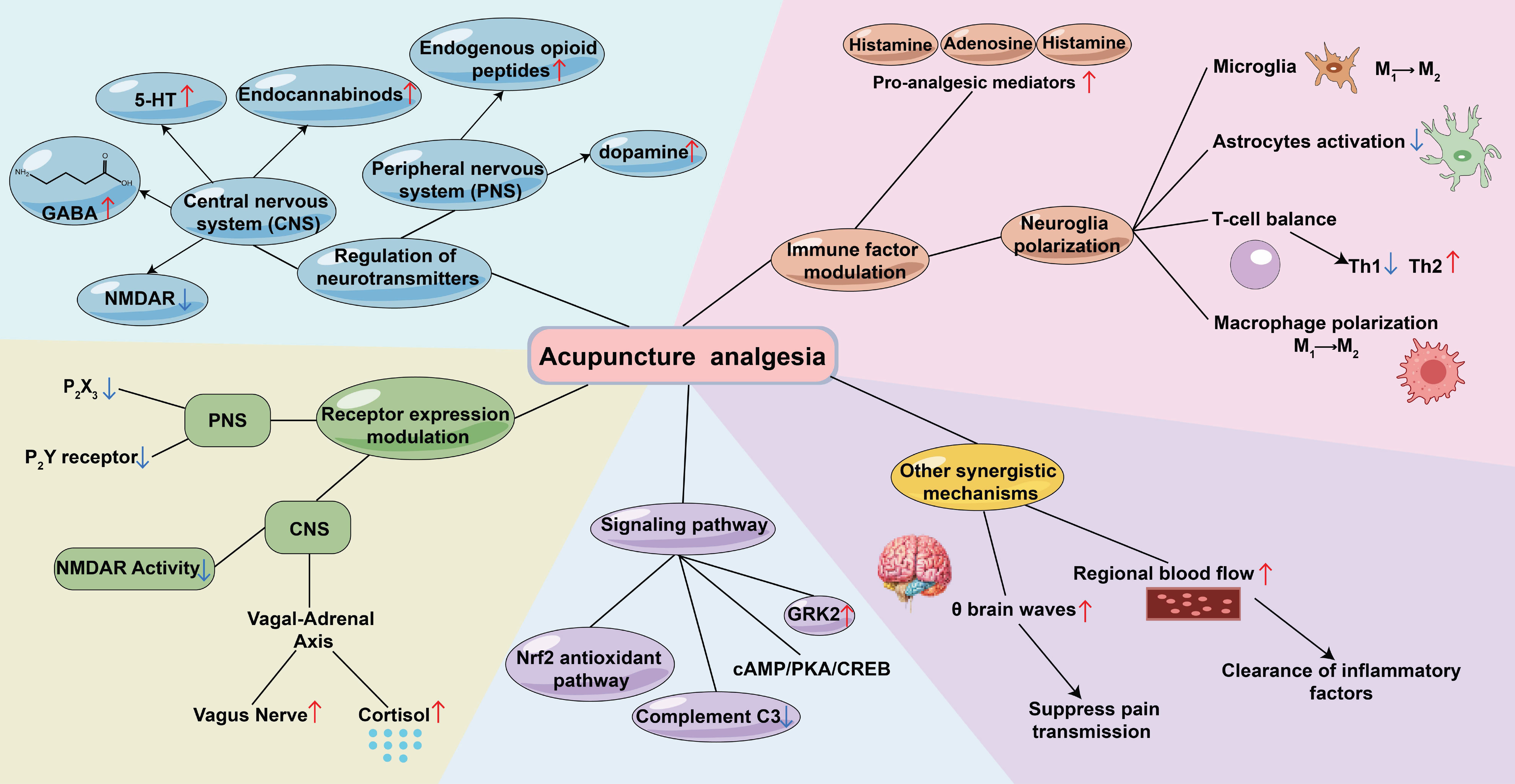
Figure 2. Schematic overview of mechanisms underlying acupuncture-mediated analgesia relevant to perioperative care. Acupuncture stimulation modulates interconnected central and peripheral pathways, including neurotransmitter regulation, receptor activity (e.g., purinergic receptors and NMDAR), immune and neuroendocrine responses, and intracellular signaling cascades. Additional systemic effects, such as vagaladrenal activation and enhanced clearance of inflammatory mediators, may further contribute to reduced nociceptive signaling and perioperative pain. Created by the authors using BioRender. 5-HT, 5-hydroxytryptamine; GABA, γ-aminobutyric acid; NMDAR, N-methyl-D-aspartate receptor; PNS, peripheral nervous system; CNS, central nervous system; P2X3/P2Y, purinergic receptors; Nrf2, nuclear factor erythroid 2-related factor 2; GRK2, G protein-coupled receptor kinase 2; cAMP, cyclic adenosine monophosphate; PKA, protein kinase A; CREB, cAMP response element-binding protein; Th1/Th2, T helper 1/2 cells.
5.1 Regulation of neurotransmitters
As a distinct non-pharmacological component of perioperative analgesia, acupuncture modulates neurotransmitter activity in both the central and peripheral nervous systems, thereby influencing pain perception and stress-related responses during surgery.
As illustrated in Figure 3, needling at commonly used acupoints such as Large Intestine 4 has been shown to activate γ-aminobutyric acid (GABA) receptors in the CNS. GABA is the primary inhibitory neurotransmitter in the CNS and plays a critical role in suppressing excessive neuronal excitability. Acupuncture-induced activation of GABAergic signaling reduces neuronal excitability in the spinal dorsal horn, a key relay center for nociceptive transmission, thereby attenuating ascending pain signals during the perioperative period [28]. Acupuncture has also been reported to influence serotonergic signaling by activating 5-hydroxytryptamine (5-HT) receptors and promoting 5-HT release [31-33]. Serotonin participates in descending inhibitory pain pathways and contributes to the modulation of pain perception and affective responses. Increased central 5-HT availability may suppress nociceptive transmission and alleviate perioperative anxiety and stress, which are known to amplify pain perception [28, 34, 35]. It should be noted, however, that variations in surgical models, stimulation parameters, and timing of intervention may account for inconsistent findings regarding serotonergic changes across studies, highlighting the need for standardized perioperative protocols.
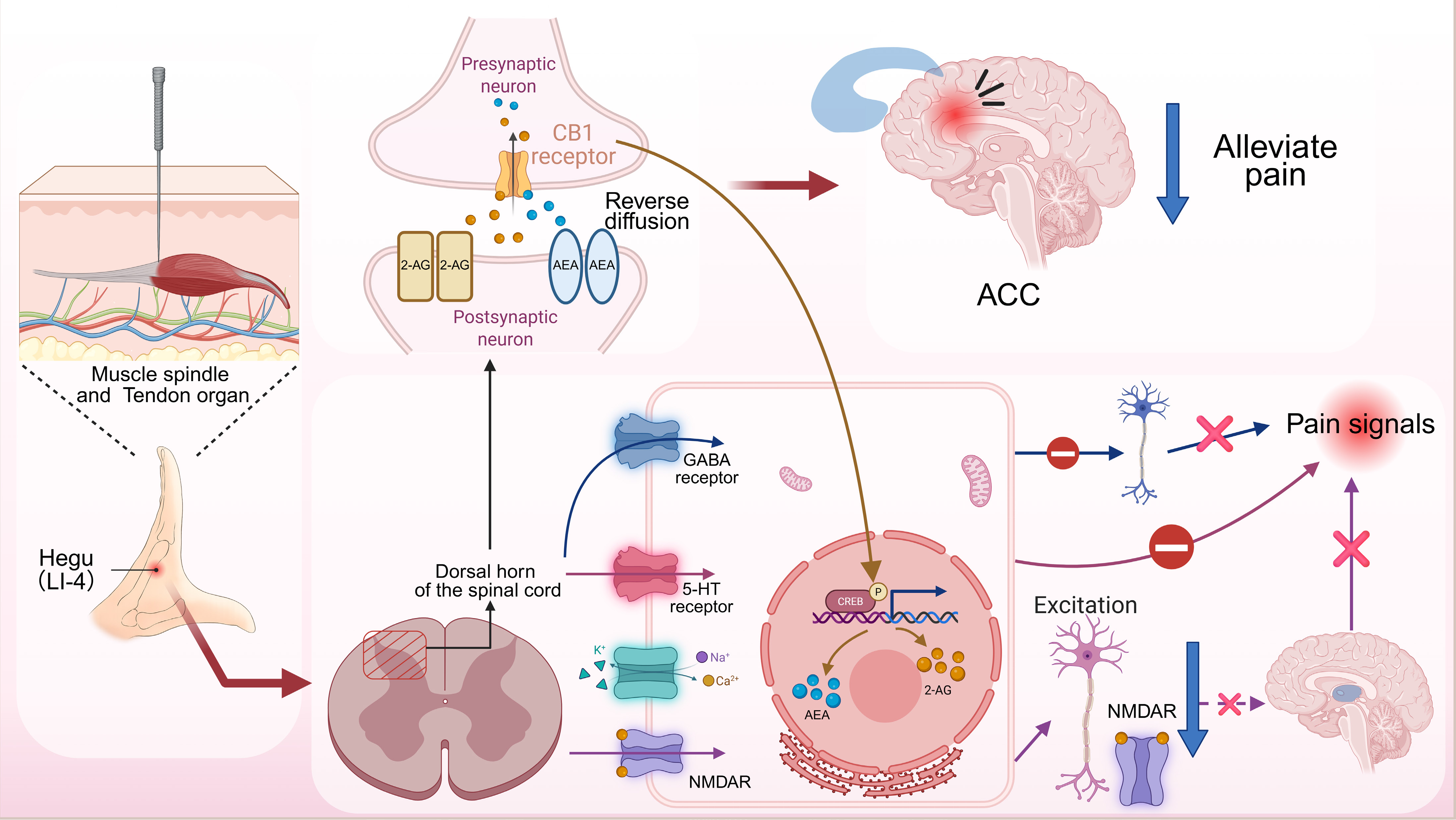
Figure 3. Multilevel central neuroregulatory mechanisms relevant to acupuncture anesthesia (electroacupuncture example). Electroacupuncture stimulation at the Hegu (LI-4) acupoint modulates pain processing at spinal and supraspinal levels. It has been reported to enhance endocannabinoid signaling and CB1 receptor activation, reducing presynaptic neurotransmitter release via retrograde signaling. In parallel, inhibitory transmission mediated by GABA and 5-HT receptors is strengthened, whereas excitatory NMDAR signaling is suppressed. Together, these effects attenuate nociceptive transmission in the spinal dorsal horn and ACC, supporting perioperative analgesia. Created by the authors using Adobe Illustrator. ACC, anterior cingulate cortex; CB1 receptor, cannabinoid receptor type 1; 2-AG, 2-arachidonoylglycerol; AEA, arachidonoylethanolamide (anandamide); GABA, γ-aminobutyric acid; 5-HT, 5-hydroxytryptamine; NMDAR, N-methyl-D-aspartate receptor; CREB, cAMP response element-binding protein; LI-4, Large Intestine 4.
In addition, acupuncture modulates the endocannabinoid system and N-methyl-D-aspartate receptor (NMDAR) signaling pathways, particularly within supraspinal regions involved in pain modulation, such as the anterior cingulate cortex (ACC) [36, 37]. Although ACC hyperactivity is more extensively characterized in chronic pain states, perioperative noxious stimulation can also engage affective–cognitive pain networks. Acupuncture has been shown to increase levels of endocannabinoid ligands, including anandamide and 2-arachidonoylglycerol, as well as cannabinoid type 1 receptor expression, thereby reducing neuronal hyperexcitability and contributing to analgesic effects [28, 36]. Regulation of NMDAR signaling further limits excessive excitatory transmission and may help prevent perioperative central sensitization [36, 38].
At the peripheral level, acupuncture induces the release of endogenous opioids such as β-endorphin and enkephalin [32, 39]. These endogenous peptides bind to opioid receptors and inhibit nociceptive signal transmission in a manner analogous to exogenous opioids, but without the risks of tolerance and dependence [8, 28, 40]. This mechanism provides a biological basis for the opioid-sparing effects observed in perioperative settings [38]. Moreover, acupuncture has been shown to modulate dopaminergic activity [31, 41]. Dopamine plays an important role in reward processing, motor control, and emotional regulation, and its modulation may indirectly influence pain perception by alleviating negative affective states associated with surgical stress and pain [34, 42].
5.2 Regulation of immune and inflammatory factors
Acupuncture stimulation modulates immune and inflammatory responses that are closely associated with perioperative pain and surgical stress. Local acupuncture stimulation promotes the release of immune mediators, including histamine, adenosine, and β-endorphin, which exert analgesic effects by directly or indirectly binding to receptors on peripheral nerve endings [40]. Among these mediators, adenosine—an endogenous purine nucleoside—has been shown to significantly attenuate mechanical and thermal hyperalgesia through activation of adenosine receptors (A1, A2A, A2B, and A3) [40]. Although this mechanism has been extensively studied in both acute and chronic pain models, it is also highly relevant to perioperative nociception, in which tissue injury and inflammation play a central role.
At the central level, acupuncture influences neuroimmune interactions by modulating microglial activation and polarization. Microglia, the resident immune cells of the CNS, exhibit distinct functional phenotypes, including the pro-inflammatory M1 phenotype and the anti-inflammatory M2 phenotype. Acupuncture has been shown to promote a shift from the M1 to the M2 microglial state, thereby suppressing neuroinflammatory responses [29, 30, 37]. M1 microglia release pro-inflammatory cytokines such as tumor necrosis factor-α (TNF-α), interleukin-1β (IL-1β), and interleukin-6, which amplify neuroinflammation and enhance nociceptive sensitization. In contrast, M2 microglia secrete anti-inflammatory mediators, including interleukin-10 and transforming growth factor-β, which facilitate inflammation resolution and tissue repair [29, 39]. Through regulation of microglial polarization, acupuncture stimulation attenuates neuroinflammation and reduces central sensitization relevant to perioperative pain processing.
Acupuncture stimulation also modulates peripheral immune responses that contribute to pain and inflammation following surgical injury. T lymphocyte subsets, including T helper 1 (Th1) and T helper 2 (Th2) cells, play opposing roles in immune regulation. Th1 cells predominantly secrete pro-inflammatory cytokines such as interferon-γ and interleukin-2, whereas Th2 cells produce anti-inflammatory mediators including interleukin-4, interleukin-5, and interleukin-13. Acupuncture has been reported to rebalance the Th1/Th2 axis by reducing pro-inflammatory cytokine release and enhancing anti-inflammatory signaling [31]. In parallel, acupuncture promotes macrophage polarization from the pro-inflammatory M1 phenotype toward the anti-inflammatory M2 phenotype, further limiting inflammatory mediator production and supporting pain relief [31].
Within the spinal cord, acupuncture suppresses excessive activation of glial cells, including microglia and astrocytes, which are key contributors to neuroinflammation and pain sensitization [28]. Overactivation of these glial cells leads to increased release of inflammatory mediators such as TNF-α and IL-1β, thereby amplifying nociceptive signaling. By inhibiting glial activation and inflammatory factor release, acupuncture stimulation mitigates neuroinflammatory processes and contributes to reduced pain sensitivity during the perioperative period [29].
5.3 Regulation of receptor expression and neuroregulatory pathways
In the peripheral nervous system, acupuncture modulates the expression and activity of purinergic receptors, which play a critical role in inflammatory and nociceptive signaling. Purinergic receptors are broadly classified into ionotropic P2X receptors and G-protein-coupled P2Y receptors. These receptors are activated by extracellular adenosine triphosphate, which is released in large quantities following tissue injury and surgical trauma. Activation of purinergic receptors, including P2X3, P2X4, P2X7, and P2Y subtypes, contributes to peripheral sensitization and inflammation-associated pain [43]. Experimental evidence indicates that acupuncture downregulates the expression of purinergic receptors, thereby attenuating adenosine triphosphate-mediated activation of sensory neurons and immune cells and reducing inflammatory and nociceptive signaling [37, 44]. In particular, P2X3 receptors, which are predominantly expressed on primary sensory neurons, have been implicated in the development and maintenance of pain sensitization. Suppression of P2X3 receptor expression by acupuncture may therefore diminish peripheral nociceptive transmission and contribute to analgesia in the perioperative setting [28, 33, 44].
Within the CNS, acupuncture modulates NMDAR activity, a key mechanism involved in excitatory synaptic transmission and pain signal amplification. NMDARs are widely distributed in pain-processing regions, including the spinal dorsal horn and supraspinal structures such as the ACC. Excessive activation of NMDARs enhances excitatory neurotransmission and facilitates central sensitization. Although central sensitization is more extensively characterized in chronic pain, perioperative noxious stimulation can transiently engage similar excitatory mechanisms. By regulating NMDAR activation, acupuncture attenuates nociceptive signal transmission in the spinal dorsal horn and reduces excessive excitability in supraspinal pain-modulating regions, thereby contributing to perioperative analgesia [36, 37, 45]. The ACC plays an important role in the affective and cognitive dimensions of pain perception. Overactivation of this region is associated with heightened pain-related distress and negative emotional responses. Modulation of NMDAR signaling by acupuncture may alleviate excessive ACC excitability, thereby attenuating pain-related emotional responses during the perioperative period [34, 36-38].
In addition to receptor-level modulation, acupuncture exerts systemic anti-inflammatory and analgesic effects through activation of the vagus nerve–adrenal axis. Vagal stimulation influences autonomic balance and promotes adrenal release of anti-inflammatory hormones, including cortisol [30, 31, 39, 41]. Cortisol, a key glucocorticoid hormone, suppresses the production and release of pro-inflammatory cytokines and modulates immune responses, thereby limiting inflammation-induced pain [31]. Through this neuroendocrine pathway, acupuncture achieves coordinated peripheral and central regulation extending beyond local stimulation sites. Collectively, modulation of purinergic receptors, glutamatergic signaling, and autonomic–endocrine pathways forms an integrated biological network that contributes to perioperative analgesia.
5.4 Modulation of signaling pathway activation
Acupuncture exerts analgesic and anti-inflammatory effects through modulation of multiple intracellular signaling pathways that regulate oxidative stress, synaptic plasticity, immune responses, and neuroinflammation. In perioperative conditions, surgical trauma and ischemia–reperfusion processes are often accompanied by excessive production of reactive oxygen species, which contribute to inflammation and nociceptive sensitization. One key pathway involved is the nuclear factor erythroid 2–related factor 2 (Nrf2) signaling pathway. Under oxidative stress, Nrf2 dissociates from its cytoplasmic inhibitor Kelch-like ECH-associated protein 1, translocates into the nucleus, and binds to antioxidant response elements, thereby up-regulating transcription of antioxidant and cytoprotective genes. Acupuncture has been shown to activate the Kelch-like ECH-associated protein 1–Nrf2–antioxidant response element pathway, thus enhancing antioxidant capacity, reducing reactive oxygen species accumulation, and decreasing inflammation-related pain [34, 36, 40]. This mechanism is particularly relevant in the perioperative environment, as oxidative stress plays a key role in tissue damage and postoperative pain.
In parallel, acupuncture modulates signaling pathways involved in synaptic plasticity. The cyclic adenosine monophosphate (cAMP)/protein kinase A/cAMP response element-binding protein cascade is a central regulator of activity-dependent gene transcription and maladaptive synaptic plasticity. Overactivation of this pathway has been considered to be related to pain amplification and sensitization. By down-regulating cAMP/protein kinase A/cAMP response element-binding protein signaling, acupuncture reduces aberrant neuronal excitability and limits nociceptive signal amplification [34, 36, 38].
Acupuncture also influences neuroimmune signaling pathways associated with glial activation. Down-regulation of complement component C3 has been shown to suppress spinal microgliosis and astrogliosis, thereby decreasing the release of pro-inflammatory mediators and mitigating neuroinflammatory responses [29, 35, 45]. Furthermore, acupuncture modulates G protein-coupled receptor kinase 2 (GRK2) expression in spinal neurons. GRK2 plays a critical role in the regulation of inflammatory signaling, and its reduced expression is associated with pain chronification. Acupuncture-induced up-regulation of GRK2 suppresses microglial activation, decreases pro-inflammatory cytokines such as TNF-α and IL-1β, and enhances anti-inflammatory cytokines including interleukin-10 and interleukin-4, collectively contributing to attenuation of inflammatory pain [28-30, 37].
Taken together, modulation of antioxidant pathways, synaptic plasticity-related signaling, and neuroimmune cascades allows acupuncture to exert coordinated analgesic and anti-inflammatory effects that are relevant to perioperative pain control.
5.5 Additional neurophysiological and systemic mechanisms
In addition to the mechanisms described above, acupuncture may engage broader neurophysiological and systemic regulatory processes. Modulation of immune–endothelial interactions and enhancement of local microcirculation have been reported to facilitate clearance of inflammatory mediators and support tissue recovery following surgical injury [29, 35-37].
At the central level, acupuncture may influence nociceptive processing by modulating cerebral oscillatory activity, including theta rhythm regulation, which has been implicated in pain perception and cognitive–affective processing of noxious stimuli [43]. This central regulation indicates that in addition to receptor- and pathway-level mechanisms, additional levels of neural regulation exist.
Psychological and emotional factors may also affect perioperative outcomes. Preoperative anxiety associated with surgery or unfamiliar anesthesia techniques may exacerbate pain perception. Acupuncture has been reported to exert a sedative effect by regulating the neurotransmitter system [41, 42]. In addition, effective communication and comfort provided by experienced clinicians may further reduce anxiety and enhance patient cooperation. Although these psychosocial factors are not the primary analgesic biological mechanisms, they may contribute to the overall perioperative experience and perception of therapeutic effect.
Collectively, these multi-level regulatory processes indicate that acupuncture modulates neural, immune, endocrine, and central integrative systems in a coordinated manner, influencing both nociceptive processing and perioperative stress responses. This integrated biological framework supports the mechanistic plausibility of acupuncture in perioperative contexts. The key molecular, neuroimmune, and neuroregulatory mechanisms discussed above are summarized in Table 1.
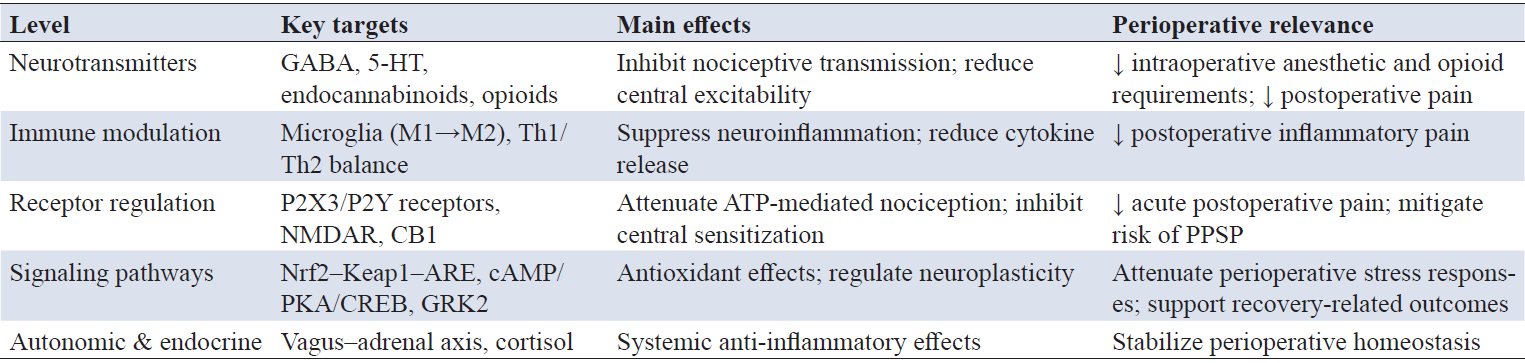
Note: GABA, γ-aminobutyric acid; 5-HT, 5-hydroxytryptamine; Th1/Th2, T helper 1/T helper 2 cells; P2X3, purinergic P2X3 receptor; P2Y, purinergic P2Y receptor; NMDAR, N-methyl-D-aspartate receptor; CB1, cannabinoid receptor type 1; ATP, adenosine triphosphate; PPSP, persistent postsurgical pain; Nrf2, nuclear factor erythroid 2-related factor 2; Keap1, Kelch-like ECH-associated protein 1; ARE, antioxidant response element; cAMP, cyclic adenosine monophosphate; PKA, protein kinase A; CREB, cAMP response element-binding protein; GRK2, G proteincoupled receptor kinase 2.
Based on these mechanistic understanding, AA has gradually become part of routine perioperative pain management as a multimodal analgesia and opioid-sparing strategy [46]. Its clinical use also represents a translational extension of the neuroimmunomodulatory and regulatory mechanisms described above [46]. Originating in China more than five decades ago, AA is a non-drug anesthetic technique that integrates ancient acupuncture methods with contemporary clinical practice [47, 48]. Based on the concept of perioperative precision medicine, AA can provide individualized pain management, reduce the amount of medication used, and improve postoperative recovery efficiency. Representative clinical applications of AA in perioperative medicine, together with precision-oriented considerations, are summarized in Table 2.
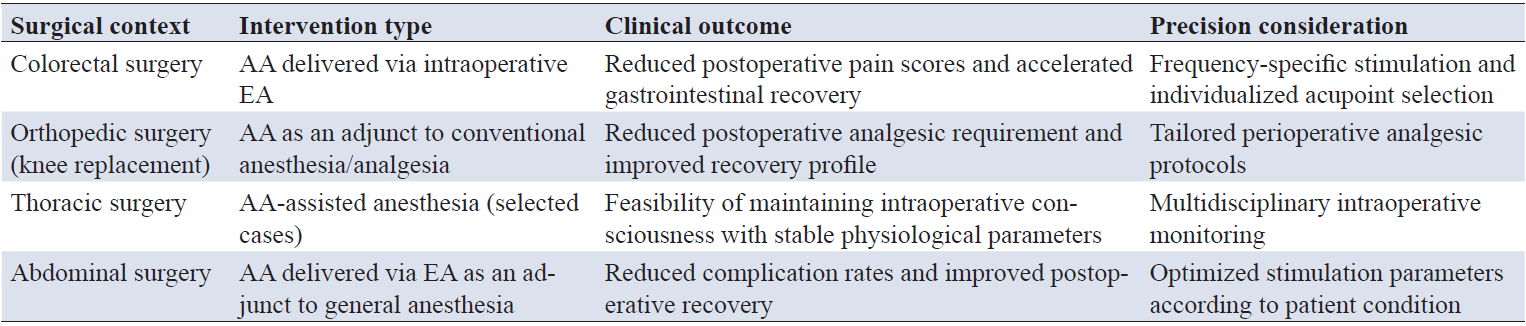
6.1 High-level evidence (randomized controlled trials [RCTs] and meta-analyses)
Some RCTs and meta-analyses have found that AA, mainly EA, offers multiple advantages for perioperative analgesia. These include lower postoperative pain scores, reduced opioid consumption, and fewer cases of PONV [47, 48].
Regarding colorectal surgery, previous clinical studies have suggested that perioperative EA may improve postoperative pain management and facilitate gastrointestinal recovery compared with conventional perioperative care. Some studies have reported earlier recovery of bowel function, including reduced time to first flatus and bowel movement, together with enhanced postoperative recovery outcomes. These findings support the potential role of EA as an adjunctive strategy within multimodal perioperative analgesia and ERAS protocols, although further high-quality studies are still needed to strengthen the evidence base.
Similarly, in orthopedic procedures such as knee arthroplasty, AA has demonstrated opioid-sparing effects and improved postoperative recovery, supporting its role as an effective adjunct within multimodal analgesia strategies [47-49].
6.2 Moderate-level evidence (controlled clinical and observational studies)
Moderate level evidence from controlled clinical trials and observation studies indicates that AA may provide additional benefits for a wider range of perioperative situations.
During the preoperative stage, studies have shown that AA can reduce anxiety levels, regulate stress responses, and increase patients' tolerance to surgical procedures [47, 48]. Preoperative anxiety is known to affect postoperative pain intensity and analgesic requirements [47]. From a mechanistic perspective, needling at specific acupoints can regulate neurotransmitter release and sympathetic nerve activity, thereby reducing mental stress. In clinical practice, this effect helps reduce perioperative analgesic medication use and enhance patient satisfaction [47, 48].
In the postoperative period, AA has been shown to reduce postoperative pain intensity, decrease opioid consumption, and lower the incidence of anesthesia-related side effects, including nausea and vomiting [46, 50]. For orthopedic and abdominal surgeries, acupuncture-assisted anesthesia can also enhance functional recovery and improve patient satisfaction. However, variations in study designs, intervention protocols, and outcome measures may lead to inconsistent findings across studies. Therefore, readers exercise caution when interpreting these results [46, 47].
6.3 Postoperative analgesia and recovery promotion
Evidence supporting the use of AA in highly invasive procedures, such as thoracic surgery, remains limited and largely exploratory. Clinical reports of procedures such as lobectomy performed under AA suggest that patients can maintain intraoperative consciousness with adequate analgesia and achieve satisfactory postoperative recovery. However, these findings are primarily derived from case reports or small-scale studies, which limits their generalizability [47, 48].
In addition, mechanistic evidence supporting perioperative applications of AA is largely extrapolated from studies on chronic or neuropathic pain. For example, EA has been shown to alleviate neuropathic pain through modulation of the transient receptor potential vanilloid 1 channel signaling pathway and suppression of neuroinflammation [50, 51]. While these mechanisms provide a plausible biological basis for postoperative analgesia, direct evidence in acute perioperative pain settings remains insufficient. Therefore, further high-quality studies are needed to validate these effects in clinical practice.
6.4 Multidisciplinary collaboration and integration into ERAS pathways
The perioperative use of AA requires good cooperation among all members of the team [46]. Surgeons, anesthesiologists, acupuncturists, nurses, rehabilitation therapists, and psychological support teams each have their own role in ensuring patient safety and comfort [46]. Preoperative multidisciplinary meetings help physicians develop individualized treatment plans for patients; intraoperative communication allows adjustment of anesthesia and surgical strategies according to patient response; and postoperative ward visitation and coordination of rehabilitation support functional recovery.
AA is one of the most promising adjunctive strategies for ERAS. Its implementation at different stages (preoperative, intraoperative, and postoperative) of the ERAS pathway is consistent with the ERAS concept of reducing surgical stress responses, minimizing opioid consumption, accelerating recovery, and improving care quality [47]. Based on standardized protocols and structured teamwork, AA can contribute to the optimization of perioperative pain management and improved patient outcomes.
7.1 Enhancing patient prognosis
The use of AA has been shown to be associated with accelerating postoperative recovery and improving perioperative results in various surgical environments. During the operation, AA can reduce the need for conventional anesthetics, which helps to improve physiological stability and promote the early recovery of consciousness and gastrointestinal function. In neurosurgical surgeries such as craniotomy, it has been reported that AA can shorten the intubation time and postoperative recovery time, while reducing the incidence of complications. AA also significantly decreases PONV, opioid consumption, and opioid-related adverse effects, thereby facilitating enhanced recovery pathways [19, 52]. By regulating the autonomic nervous system, it can reduce surgical stress, reduce the incidence of complications, accelerate recovery, shorten hospitalization time, and reduce costs [53].
In general, these perioperative benefits show that AA may improve the prognosis of patients by supporting faster recovery, reducing the drug burden and promoting physiological homeostasis during surgery [54].
7.2 Reducing dependence on medications
As a non-pharmacological intervention, AA avoids many adverse effects and dependency risks associated with drug-based analgesia. By activating the endogenous analgesic pathway, AA can reduce the dose of conventional anesthetics while maintaining sufficient perioperative analgesia. In neurosurgery such as craniotomy, research shows that AA can reduce the need for inhaled anesthetics, thus reducing the risk associated with anesthesia [52, 54]. In postoperative pain management, AA helps to reduce the use of opioids and reduce the incidence of opioid-related adverse reactions. Unlike drug analgesics, AA does not cause drug tolerance or organ-specific toxicity involving the liver, kidney or gastrointestinal system, which makes it especially suitable for patients with limited tolerance to opioids [52, 53, 55]. Compared with standard drug treatment, AA shows good safety characteristics, with fewer and milder side effects.
Additionally, AA represents a relatively simple and cost-effective intervention that does not require specialized equipment or a large amount of resources. By reducing the drug burden while maintaining analgesic effects, AA may provide a safer and more cost-effective method of perioperative pain management.
7.3 Improving patient compliance and satisfaction
AA may improve patient compliance and satisfaction through both physiological and psychosocial mechanisms. By providing analgesia while maintaining patient consciousness and physiological stability, AA encourages active patient participation and engagement during the perioperative process [53, 56]. Positive treatment expectations and reduced anxiety associated with acupuncture-based interventions may further enhance analgesic outcomes and improve perioperative comfort [19, 54, 57]. AA demonstrates a favorable safety profile, with no serious adverse events reported in most clinical studies [58, 59]. Reported side effects are generally mild and self-limiting, including minor subcutaneous bleeding or transient post-acupuncture sensations [60-62]. This safety profile contributes to increased patient confidence and adherence to perioperative treatment plans [52, 61].
Moreover, AA could increase treatment uptake among those patients who prefer complementary therapy or a non-drug treatment regimen for pain relief. Combined with conventional treatment methods, AA provides another kind of choice matching individual needs, at the same time guaranteeing a good safety and efficacy level [53, 56]. Altogether, such aspects would benefit the perioperative process, raise patient satisfaction and promote better treatment compliance.
There are still several problems limiting the wide application of AA as a complementary option for perioperative pain management. First, there are many types of heterogeneity among the published studies. These studies differ mainly in the surgical population, acupuncture methods, stimulation parameters, and outcome measurement. Second, although most of the RCTs have shown some positive effects of AA on perioperative outcomes, many of them suffer from small sample size, single-center design, and varying methodological quality, all of which weaken the reliability of current evidence and limit the development of guidelines. Third, because important perioperative outcomes such as postoperative pain intensity, opioid use, and recovery quality are not consistently measured across studies, cross-study comparison and meta-analysis cannot be performed.
In terms of clinical application, AA alone can hardly meet the anesthetic requirement of all types of surgery. In cases of more invasive procedures or prolonged surgeries with greater surgical stress, AA should be applied together with other conventional anesthesia techniques, because of its poor pain-relieving effects when used alone [63, 64]. Individual differences may affect the impact brought by AA as well. Such differences could involve both physiological differences and psychological factors, or even experience with previous treatments such as acupuncture. What’s more, diversities in the choice of acupuncture points used, types of stimulation given by acupuncturists, and the perioperative timings could affect reproducibility of experiments conducted and thus cause problems for making standardized rules on the use of AA.
There are still practical obstacles to overcome. For AA to be used effectively in hospitals, there needs to be good teamwork between anesthetists, surgeons, acupuncturists, nursing staff, and physiotherapists, etc. However, many people have not had enough training to work together properly. Standardized perioperative workflows for AA are also lacking. Finally, some hospitals do not provide sufficient support. In addition, different health systems, reimbursement rules, and legislative frameworks in different areas may influence the feasibility and sustainability of AA perioperative care. This problem could be more serious in environments where acupuncture is not included as part of perioperative care.
In order to further strengthen the evidential basis supporting the use of AA, there needs to be large-scale, well-designed multicenter trials that adopt common perioperative outcome indicators, including the postoperative pain trajectory, opioid consumption, rehabilitation quality, complication incidence, and hospitalization time [63, 65]. Furthermore, we need to clarify whether “acupuncture anesthesia” refers to intraoperative AA or postoperative acupuncture analgesia, as this may help improve the comparability of results, thereby enabling better summarization of evidence [52, 58].
In clinical practice, AA will probably be accepted as part of multimodal perioperative analgesia instead of replacing conventional anesthesia [66]. AA could be used in ERAS programs, especially in cases requiring fewer opioids and earlier recovery of functions. For better repeatability, standard operating procedures need to include the patient qualification standard, choice of acupoints, stimulation parameters (frequency and intensity), and timing in relation to surgery. In addition, a personalized strategy based on the patients’ level of anxiety, pain sensitivity, number of diseases, or previous response to acupuncture may help find out the population who will benefit most from AA [54, 67, 68].
In terms of the system level, the implementation depends on a structured, multidisciplinary training and systematic institutional support. A stratified education programme could facilitate safer integration into daily practice by specifying the role-specific competence of anesthesiologists, acupuncturists, and perioperative nurses involved. Both real-world evidence and health economic evaluation are still required to demonstrate the cost-effectiveness and provide information for reimbursement, as well as for policy-making. By improving the methodology, standardizing the protocol, and selecting patients accurately, AA might evolve as a reliable adjunct for perioperative pain management to support safe analgesia and better rehabilitation.
This review aims to summarize the function of AA in comprehensive perioperative pain treatment which includes history development, mechanism explanation, real world application, and current challenges. Integrating basic theory of TCM and up-to-date anesthesia science, AA can serve as an innovative non-drug therapy in the current perioperative healthcare scenario [13, 47].
From a mechanistic point of view, AA shows pain relief action and control role via synchronized control over the neurological system, immune system, hormonal system, and autonomic nervous system [69]. Both experimental and clinical studies suggest that AA influences the set up of related biological network which can transmit pain information, generate inflammation reaction and adjust perioperative stress condition [28, 29, 40].
In terms of clinical studies, AA shows great potential as one element of multimodal anesthesia regimens. There seems to be enough evidence to show that AA can reduce the use of anesthetic drugs and analgesics, and alleviate post-operative pain. It also can help patients’ speedy recovery and decrease some kinds of anesthetic complications [14, 17, 18]. But we must stress that AA at present just takes on a supplementary role instead of replacing traditional anesthesia method especially when conducting complicated operations or serious surgical invasions [11, 47].
In spite of all these impressive results, there are still quite some significant constraints that ought to be brought up. Studies conducted to date tend to have relatively small samples, insufficient number of high quality randomized controlled trials, and great diversity in acupuncture techniques plus perioperative management methods [13, 46]. In addition, methodological issues such as inadequate blinding and regional concentration of studies may further limit the generalizability of current evidence. Some practical difficulties like differences in practitioner training level, and lack of enough institutional backing will also prevent us from popularizing AA treatment across different hospitals or medical centers.
To address these challenges, future research should focus on the development of standardized intervention protocols, the conduct of large-scale multicenter randomized controlled trials, and the clarification of the distinct roles of intraoperative and postoperative acupuncture interventions. Furthermore, the establishment of structured training programs and interdisciplinary collaboration will be essential for integrating AA into modern perioperative care systems [46].
In summary, integrating traditional Chinese medicine methods into modern perioperative procedures is a significant direction. And with method improvement and further clinical studies verification, AA would have the possibility to become a science-based complementary option for better pain relief and quicker recovery after operation [47].
Author contributions
Chenlei Qian was responsible for conceptualization, literature search, writing the original draft, and reviewing and editing the manuscript.
Funding
This research received no external funding.
Data availability
Not applicable.
Ethics approval and consent to participate
Not applicable.
Consent for publication
Not applicable.
Competing interests
The author declares that there is no conflict of interest.
Acknowledgements
Artificial intelligence tools (ChatGPT-5.5 and Kimi K2.6) are used to assist in language retouching and improving clarity. The author reviews, edits and verifies the scientific accuracy and originality of all contents, and bears full responsibility for the final manuscript.
[1] Lu Z, Dong H, Wang Q, Xiong L. Perioperative acupuncture modulation: More than anaesthesia. Br J Anaesth. 2015 Aug;115(2):183-193. http://doi.org/10.1093/bja/aev227
[2] Holmes A, Christelis N, Arnold C. Depression and chronic pain. Med J Aust. 2013 Sep 16;199(S6):S17-20. https://doi.org/10.5694/mja12.10589
[3] Chaudakshetrin P, Cardosa MS, Goh CR, Javier FO, Musba AMT, Prateepavanich P, et al. Establishment of multidisciplinary pain management clinics and training programs in the developing world: Experiences from Southeast Asia. Pain. 2020 Sep;161 Suppl 1:S87-S94. http://doi.org/10.1097/j.pain.0000000000001871
[4] Russo CM, Brose WG. Chronic pain. Annu Rev Med. 1998 Feb;49:123-133. http://doi.org/10.1146/annurev.med.49.1.123
[5] Dysvik E, Kvaloy JT, Stokkeland R, Natvig GK. The effectiveness of a multidisciplinary pain management programme managing chronic pain on pain perceptions, health-related quality of life and stages of change-A non-randomized controlled study. Int J Nurs Stud. 2010 Jul;47(7):826-835. http://doi.org/10.1016/j.ijnurstu.2009.12.001
[6] Burns S, Urman R, Pian R, Coppes OJM. Reducing new persistent opioid use after surgery: A review of interventions. Curr Pain Headache Rep. 2021 Mar 24;25(5):27. http://doi.org/10.1007/s11916-021-00943-6
[7] Bertsche T, Askoxylakis V, Habl G, Laidig F, Kaltschmidt J, Schmitt SP, et al. Multidisciplinary pain management based on a computerized clinical decision support system in cancer pain patients. Pain. 2009 Dec;147(1):20-28. http://doi.org/10.1016/j.pain.2009.07.009
[8] Zhao Z. Neural mechanism underlying acupuncture analgesia. Prog Neurobiol. 2008 Aug;85(4):355-375. http://doi.org/10.1016/j.pneurobio.2008.05.004
[9] Chen G. Acupuncture anesthesia in neurosurgery. Am J Chin Med. 1980;8(3):271-282. http://doi.org/10.1142/s0192415x80000244
[10] Hollinger I, Richter JA, Pongratz W, Baum M. Acupuncture anesthesia for open heart surgery: A report of 800 cases. Am J Chin Med. 1979;7(1):77-90. http://doi.org/10.1142/s0192415x79000064
[11] Ikemoto T, Shiro Y, Ikemoto K, Hayashi K, Arai YC, Deie M, et al. Feasibility of imported self-management program for elderly people with chronic pain: A single-arm confirmatory trial. Pain Ther. 2020 Aug 25;9(2):583-599. http://doi.org/10.1007/s40122-020-00192-2
[12] Zhou J, Chi H, Cheng T, Chen T, Wu Y, Zhou W, et al. Acupuncture anesthesia for open heart surgery in contemporary China. Int J Cardiol. 2011 Jul 1;150(1):12-16. http://doi.org/10.1016/j.ijcard.2011.04.002
[13] Sun L, Wei X, Wang K, Zhou J. Research trends from 1992 to 2022 of acupuncture anesthesia: A bibliometric analysis. Front Med. 2023 Jun 8;10:1194005. http://doi.org/10.3389/fmed.2023.1194005
[14] Gemma M, Nicelli E, Gioia L, Moizo E, Beretta L, Calvi MR. Acupuncture accelerates recovery after general anesthesia: A prospective randomized controlled trial. J Integr Med. 2015 Mar;13(2):99-104. http://doi.org/10.1016/S2095-4964(15)60159-5
[15] Liu L, Fan A, Zhou H, Hu J. The history of acupuncture anesthesia for pneumonectomy in Shanghai during the 1960s. J Integr Med. 2016 Jul;14(4):285-290. http://doi.org/10.1016/S2095-4964(16)60253-4
[16] Wu G. Acupuncture anesthesia in China: Retrospect and prospect. Chin J Integr Med. 2007 Sep;13(3):163-165. http://doi.org/10.1007/s11655-007-0163-0
[17] Cui H, Wu F, Wang W, Qian J, Li J, Fan M. Acupuncture anesthesia for radiofrequency catheter ablation in treatment of persistent atrial fibrillation: A case report. Chin J Integr Med. 2021 Feb;27(2):137-140. http://doi.org/10.1007/s11655-020-3436-5
[18] Wang B, Jin F, Gao J, Yang L, Zhang Y, Yuan X, et al. Acupuncture reduces sedative and anaesthetic consumption and improves pain tolerance in patients undergoing colonoscopy: A meta-analysis. J Tradit Chin Med. 2024;44(6):1091-1103. http://doi.org/10.19852/j.cnki.jtcm.20240926.001
[19] Shah S, Godhardt L, Spofford C. Acupuncture and postoperative pain reduction. Curr Pain Headache Rep. 2022 Jun;26(6):453-458. http://doi.org/10.1007/s11916-022-01048-4
[20] Sun J, Liang Y, Luo K, Shao X, Tu M, Wu X, et al. Efficacy of different acupuncture techniques for pain and dysfunction in patients with knee osteoarthritis: A randomized controlled trial. Pain Ther. 2025 Apr;14:737-751. http://doi.org/10.1007/s40122-025-00713-x
[21] Han R, Hu J. Acupuncture: An overview on its functions, meridian pathways and molecular mechanisms. Am J Chin Med. 2024;52(5):1215-1244. http://doi.org/10.1142/S0192415X24500496
[22] Wang Q, Zhang Q, Lu F, Hu H, Zhu M. Trends in acupuncture therapy for microcirculation and hemorheology from 1998 to 2023: A bibliometric and visualized study. J Pain Res. 2024 Jan 8;17:177-196. http://doi.org/10.2147/JPR.S441512
[23] Zhong Z, Yao L, Liu Y, Wang Y, He M, Sun M, et al. Objectivization study of acupuncture Deqi and brain modulation mechanisms: A review. Front Neurosci. 2024;18:1386108. http://doi.org/10.3389/fnins.2024.1386108
[24] Xiong W, He F, You R, Xiong J, Wang Y, Zhang C, et al. Acupuncture application in chronic kidney disease and its potential mechanisms. Am J Chin Med. 2018;46(6):1169-1185. http://doi.org/10.1142/S0192415X18500611
[25] Chen B, Liu S, Jin F, Li T, Yang N, Xu Y, et al. Efficacy of acupuncture-related therapy in the treatment of primary dysmenorrhea: A network meta-analysis of randomized controlled trials. Heliyon. 2024 May 30;10(10):e30912. http://doi.org/10.1016/j.heliyon.2024.e30912
[26] Wang J, Fidimanantsoa OL, Ma L. New insights into acupuncture techniques for poststroke spasticity. Front Public Health. 2023 Apr 6;11:1155372. http://doi.org/10.3389/fpubh.2023.1155372
[27] Iacobone M, Citton M, Zanella S, Scarpa M, Pagura G, Tropea S, et al. The effects of acupuncture after thyroid surgery: A randomized, controlled trial. Surgery. 2014 Dec;156(6):1605-613. http://doi.org/10.1016/j.surg.2014.08.062
[28] Chen T, Zhang W, Chu Y, Wang Y. Acupuncture for pain management: Molecular mechanisms of action. Am J Chin Med. 2020;48(4):793-811. http://doi.org/10.1142/S0192415X20500408
[29] Wu Q, Zheng Y, Yu J, Ying X, Gu X, Tan Q, et al. Electroacupuncture alleviates neuropathic pain caused by SNL by promoting M2 microglia polarization through PD-L1. Int Immunopharmacol. 2023 Oct;123:110764. http://doi.org/10.1016/j.intimp.2023.110764
[30] Chen Y, Zhou Y, Li X, Ma X, Mi W, Chu Y, et al. Neuronal GRK2 regulates microglial activation and contributes to electroacupuncture analgesia on inflammatory pain in mice. Biol Res. 2022 Feb 3;55(1):5. http://doi.org/10.1186/s40659-022-00374-6
[31] Xu Y, Hong S, Zhao X, Wang S, Xu Z, Ding S, et al. Acupuncture alleviates rheumatoid arthritis by immune-network modulation. Am J Chin Med. 2018;46(5):997-1019. http://doi.org/10.1142/S0192415X18500520
[32] Yen C, Wu T, Hsieh CL, Huang Y, Lin Y. Distal electroacupuncture at the LI4 acupoint reduces CFA-induced inflammatory pain via the brain TRPV1 signaling pathway. Int J Mol Sci. 2019 Sep 10;20(18):4471. http://doi.org/10.3390/ijms20184471
[33] Fang J, Du J, Fang J, Xiao T, Le X, Pan N, et al. Parameter-specific analgesic effects of electroacupuncture mediated by degree of regulation TRPV1 and P2X3 in inflammatory pain in rats. Life Sci. 2018 May 1;200:69-80. http://doi.org/10.1016/j.lfs.2018.03.028
[34] Jang JH, Kim YK, Jung WM, Kim HK, Song EM, Kim HY, et al. Acupuncture improves comorbid cognitive impairments induced by neuropathic pain in mice. Front Neurosci. 2019 Sep 20;13:995. http://doi.org/10.3389/fnins.2019.00995
[35] Liao H, Hsieh CL, Huang C, Lin Y. Electroacupuncture Attenuates CFA-induced inflammatory pain by suppressing Nav1.8 through S100B, TRPV1, opioid, and adenosine pathways in mice. Sci Rep. 2017 Feb 13;7:42531. http://doi.org/10.1038/srep42531
[36] Wu J, Hua L, Liu W, Yang X, Tang X, Yuan S, et al. Electroacupuncture exerts analgesic effects by restoring hyperactivity via cannabinoid type 1 receptors in the anterior cingulate cortex in chronic inflammatory pain. Mol Neurobiol. 2024 May;61(5):2949-2963. http://doi.org/10.1007/s12035-023-03760-7
[37] Yang Y, Wang J, Zhang C, Guo Y, Zhao M, Zhang M, et al. The efficacy and neural mechanism of acupuncture therapy in the treatment of visceral hypersensitivity in irritable bowel syndrome. Front Neurosci. 2023 Sep 4;17:1251470. http://doi.org/10.3389/fnins.2023.1251470
[38] Ning Z, Gu P, Zhang J, Cheung C, Lao L, Chen H, et al. Adiponectin regulates electroacupuncture-produced analgesic effects in association with a crosstalk between the peripheral circulation and the spinal cord. Brain Behav Immunol. 2022 Jan;99:43-52. http://doi.org/10.1016/j.bbi.2021.09.010
[39] Yu M, Wei R, Zhang T, Wang J, Cheng Y, Qin F, et al. Electroacupuncture relieves pain and attenuates inflammation progression through inducing IL-10 production in CFA-induced mice. Inflammation. 2020;43(4):1233-1245. http://doi.org/10.1007/s10753-020-01203-2
[40] Dou B, Li Y, Ma J, Xu Z, Fan W, Tian L, et al. Role of neuroimmune crosstalk in mediating the anti-inflammatory and analgesic effects of acupuncture on inflammatory pain. Front Neurosci. 2021 Aug 2;15:695670. http://doi.org/10.3389/fnins.2021.695670
[41] Wu M, Chen Y, Shen Z, Zhu Y, Xiao S, Zhu X, et al. Electroacupuncture alleviates anxiety-like behaviors induced by chronic neuropathic pain via regulating different dopamine receptors of the basolateral amygdala. Mol Neurobiol. 2022;59(9):5299-5311. http://doi.org/10.1007/s12035-022-02911-6
[42] Liu H, Chen L, Zhang Z, Geng G, Chen W, Dong H, et al. Effectiveness and safety of acupuncture combined with madopar for parkinson's disease: A systematic review with meta-analysis. Acupunct Med. 2017 Dec;35(6):404-412. http://doi.org/10.1136/acupmed-2016-011342
[43] Hole K, Berge OG. Regulation of pain sensitivity in the central nervous system. Cephalalgia. 1981 Mar;1(1):51-59. http://doi.org/10.1111/j.1468-2982.1981.tb00008.x
[44] Shen D, Zheng Y, Zhang D, Shen X, Wang L. Acupuncture modulates extracellular ATP levels in peripheral sensory nervous system during analgesia of ankle arthritis in rats. Purinergic Sign al. 2021;17(3):411-424. http://doi.org/10.1007/s11302-021-09777-8
[45] Wang C, He H, Gao T, Sun X, Du L, Yang Y, et al. Analgesic Effect of exercise on neuropathic pain via regulating the complement component 3 of reactive astrocytes. Anesth Analg. 2024 Oct;139(4):840-850. http://doi.org/10.1213/ANE.0000000000006884
[46] Formenti P, Piuri G, Bisatti R, Pinciroli R, Umbrello M. Role of acupuncture in critically ill patients: A systematic review. J Tradit Complement Med. 2023 Jan;13(1):62-71. http://doi.org/10.1016/j.jtcme.2022.10.005
[47] Yuan W, Wang Q. Perioperative acupuncture medicine: A novel concept instead of acupuncture anesthesia. Chin Med J. 2019 Mar 20;132(6):707-715. http://doi.org/10.1097/CM9.0000000000000123
[48] Zhang W, Zhang H, Wang S, Guo J, Ma Y, Li Y, et al. Perioperative acupuncture optimizes surgical outcomes: Theory, clinical practice and future perspectives. Am J Chin Med. 2022;50(4):961-978. http://doi.org/10.1142/S0192415X22500392
[49] Lin Y. Acupuncture treatment for insomnia and acupuncture analgesia. Psychiatry Clin Neurosci. 1995 May;49(2):119-120. http://doi.org/10.1111/j.1440-1819.1995.tb01874.x
[50] Hsiao IH, Liao H, Lin Y. Optogenetic modulation of electroacupuncture analgesia in a mouse inflammatory pain model. Sci Rep. 2022 May 1;12(1):9067. http://doi.org/10.1038/s41598-022-12771-8
[51] Hsiao IH, Yen CM, Hsu HC, Liao HY, Lin YW. Chemogenetics modulation of electroacupuncture analgesia in mice spared nerve injury-induced neuropathic pain through TRPV1 signaling pathway. Int J Mol Sci. 2024 Feb 1;25(3):1771. http://doi.org/10.3390/ijms25031771
[52] Asmussen S, Maybauer DM, Chen JD, Fraser JF, Toon MH, Przokora R, et al. Effects of acupuncture in anesthesia for craniotomy: A meta-analysis. J Neurosurg Anesthesiol. 2017 Jul;29(3):219-227. http://doi.org/10.1097/ana.0000000000000290
[53] Qiao L, Guo M, Qian J, Xu B, Gu C, Yang Y. Research advances on acupuncture analgesia. Am J Chin Med. 2020;48(2):245-258. http://doi.org/10.1142/S0192415X20500135
[54] Li Y, Yu Y, Liu Y, Yao W. Mast cells and acupuncture analgesia. Cells. 2022 Mar 2;11(5):860. http://doi.org/10.3390/cells11050860
[55] Patil S, Sen S, Bral M, Reddy S, Bradley KK, Cornett EM, et al. The role of acupuncture in pain management. Curr Pain Headache Rep. 2016 Feb 20;20(4):22. http://doi.org/10.1007/s11916-016-0552-1
[56] Wang S, Harris RE, Lin Y, Gan T. Acupuncture in 21st century anesthesia: Is there a needle in the haystack? Anesth Analg. 2013 Jun;116(6):1356-1359. http://doi.org/10.1213/ANE.0b013e31828f5efa
[57] Han J. Acupuncture analgesia: Areas of consensus and controversy. Pain. 2011 Mar;152(3):S41-S48. http://doi.org/10.1016/j.pain.2010.10.012
[58] Lee H, Ernst E. Acupuncture analgesia during surgery: A systematic review. Pain. 2005 Apr;114(3):511-517. http://doi.org/10.1016/j.pain.2005.02.011
[59] Vas J, Aranda JM, Modesto M, Benitez-Parejo N, Herrera A, Martinez-Barquin DM, et al. Acupuncture in patients with acute low back pain: A multicentre randomised controlled clinical trial. Pain. 2012 Sep;153(9):1883-1889. http://doi.org/10.1016/j.pain.2012.05.033
[60] Tu J, Yang J, Shi G, Yu Z, Li J, Lin L, et al. Efficacy of intensive acupuncture versus sham acupuncture in knee osteoarthritis: A randomized controlled trial. Arthritis Rheumatol. 2021 Mar;73(3):448-458. http://doi.org/10.1002/art.41584
[61] Tu J, Shi G, Yan S, Ni G, Yu F, Cai G, et al. Acupuncture vs sham acupuncture for chronic sciatica from herniated disk: A randomized clinical trial. JAMA Intern Med. 2024 Dec 1;184(12):1417-1424. http://doi.org/10.1001/jamainternmed.2024.5463
[62] Hinman RS, McCrory P, Pirotta M, Relf I, Forbes A, Crossley KM, et al. Acupuncture for chronic knee pain: A randomized clinical trial. JAMA. 2014 Oct 1;312(13):1313-1322. http://doi.org/10.1001/jama.2014.12660
[63] Kong J, Puetz C, Tian L, Haynes I, Lee E, Stafford RS, et al. Effect of electroacupuncture vs sham treatment on change in pain severity among adults with chronic low back pain: A randomized clinical trial. JAMA Netw Open. 2020 Oct 27;3(10):e2022787. http://doi.org/10.1001/jamanetworkopen.2020.22787
[64] Qin P, Zou B, Liu D, Li M, Liu X, Wei K. Lateral quadratus lumborum block vs acupuncture for postcesarean analgesia: A randomized clinical trial. Am J Obstet Gynecol MFM. 2024 Aug;6(8):101433. http://doi.org/10.1016/j.ajogmf.2024.101433
[65] Wang S, Kain ZN, White PF. Acupuncture analgesia: II. Clinical considerations. Anesth Analg. 2008 Feb;106(2):611-621. http://doi.org/10.1213/ane.0b013e318160644d
[66] Cheng T. Acupuncture anesthesia for open heart surgery: Past, present and future. Int J Cardiol. 2011 Jul 1;150(1):1-3. http://doi.org/10.1016/j.ijcard.2011.04.008
[67] Madsen MV, Gotzsche PC, Hrobjartsson A. Acupuncture treatment for pain: Systematic review of randomised clinical trials with acupuncture, placebo acupuncture, and no acupuncture groups. BMJ. 2009 Janv 28;338:a3115. http://doi.org/10.1136/bmj.a3115
[68] Cheuk DK, Yeung WF, Chung KF, Wong V. Acupuncture for insomnia. Cochrane Database Syst Rev. 2012 Sep 12;2012(9):Cd005472. http://doi.org/10.1002/14651858.CD005472.pub3
[69] Groppetti D, Pecile AM, Sacerdote P, Bronzo V, Ravasio G. Effectiveness of electroacupuncture analgesia compared with opioid administration in a dog model: A pilot study. Br J Anaesth. 2011;107(4):612-618. http://doi.org/10.1093/bja/aer199
ISSN: 2957-5443
Volume 4, Issue 2
June 2026
Pages: 149-277


 Log In

 On This Page
 CITE
CITE